
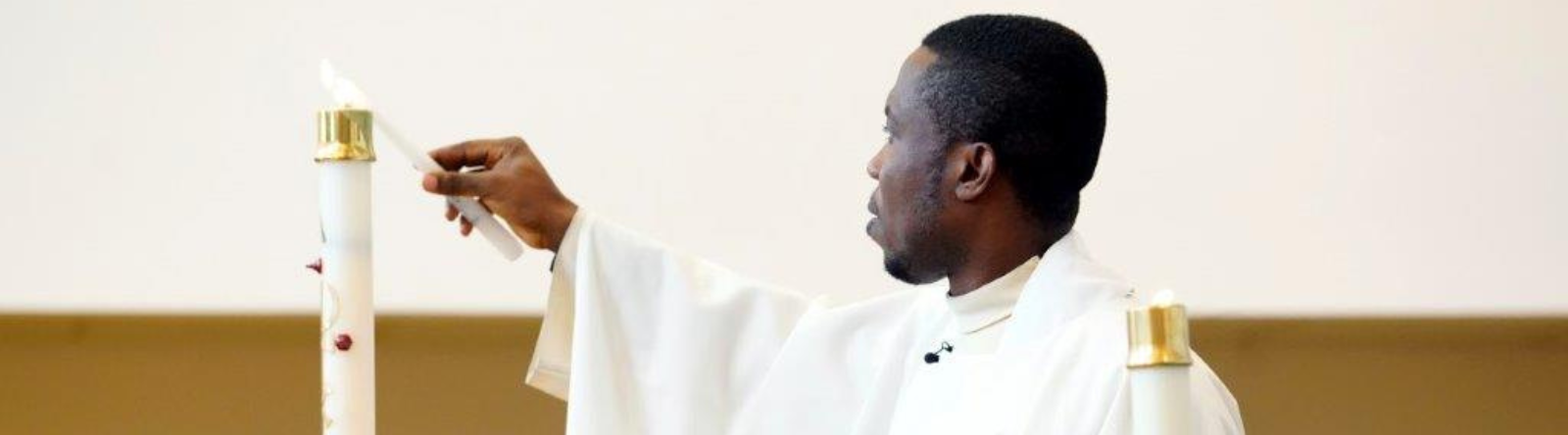

The Sacrament of the Anointing of the Sick extends the healing of Jesus Christ for those who are ill and are suffering. Please call the parish office (631) 234-6535 for sick calls.
El Sacramento de la Unción de los enfermos imparte la sanación de Cristo a aquellos que sufren por las enfermedades. Favor de llamar a las oficinas de la parroquia al (631) 234-6535 si aleguen necesita este sacramento.
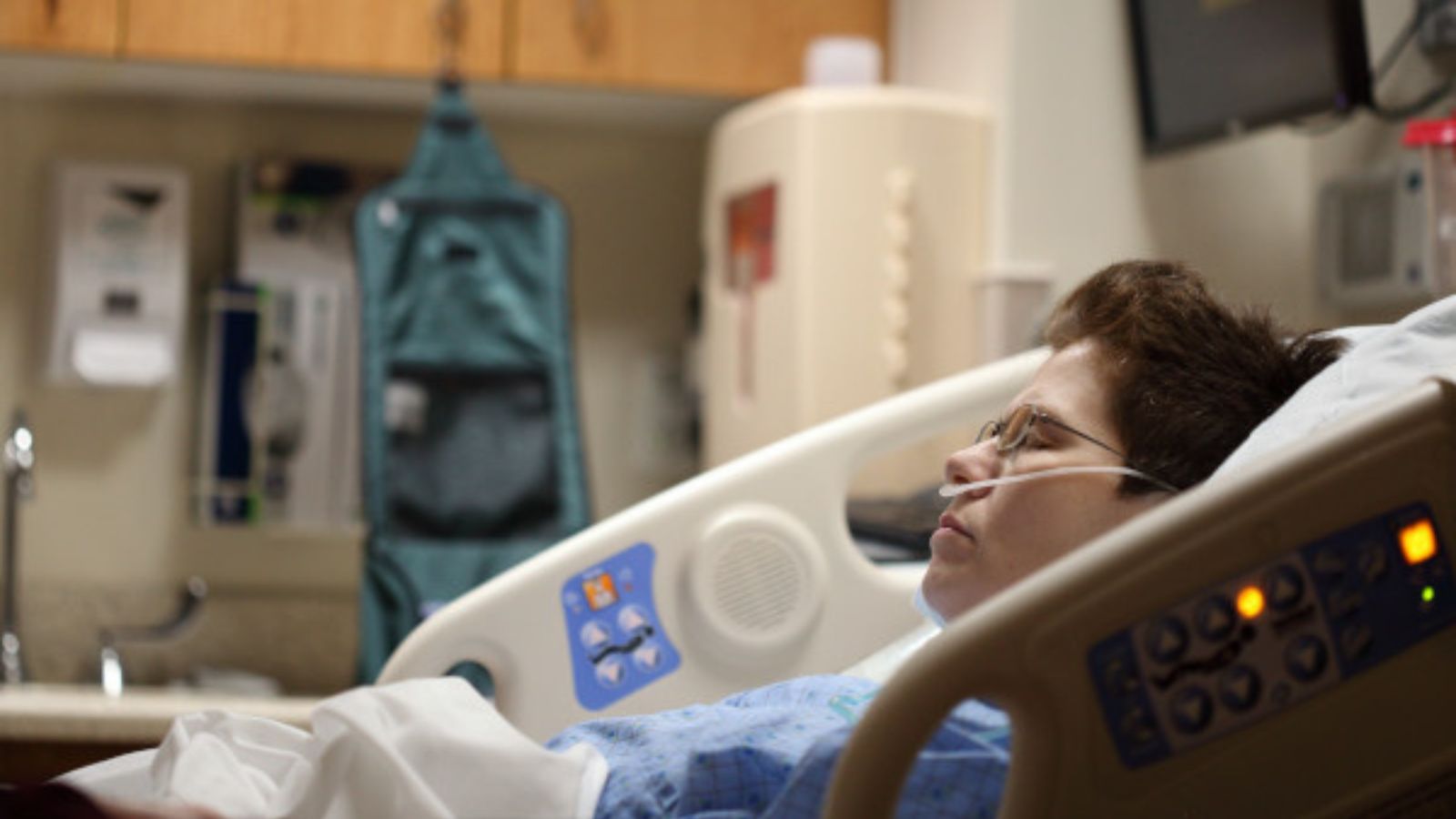
This ministry of healing is extended to priests who share in the healing mission of Jesus Christ. This sacrament is given to those who are seriously ill, who may be undergoing serious surgery, or in great need of God's healing in their lives. If it is possible, the Sacrament of Reconciliation precedes this sacrament and is followed by the Sacrament of the Holy Eucharist.
Este ministerio de sanación es administrado por los sacerdotes quienes comparten la misión sanadora de Jesús. Éste sacramento lo pueden recibir aquellos que estan gravemente enfermos, aquellos que van a ser intervenidos en cirugías, o que sus vidas estén en peligro de muerte. Cuándo es posible, el sacramento de la confesión se da primero y por último la Sagrada Comunión.
If you or a family member needs to be anointed, please contact the parish office.
Si usted o un familiar suyo necesita recibir el sacrametno de la unción de los enfermos, favor de llamar a la oficina de la parroquia.
THE SACRAMENT OF ANOINTING OF THE SICK IN THE CATECHISM OF THE CATHOLIC CHURCH
THE ANOINTING OF THE SICK
1499 "By the sacred anointing of the sick and the prayer of the priests the whole Church commends those who are ill to the suffering and glorified Lord, that he may raise them up and save them. And indeed she exhorts them to contribute to the good of the People of God by freely uniting themselves to the Passion and death of Christ." [LG 11; cf. Jas 5:14-16; Rom 8:17; Col 1:24; 2 Tim 2:11-12; 1 Pet 4:13]
I. ITS FOUNDATIONS IN THE ECONOMY OF SALVATION
Illness in human life
1500 Illness and suffering have always been among the gravest problems confronted in human life. In illness, man experiences his powerlessness, his limitations, and his finitude. Every illness can make us glimpse death. [1006]
1501 Illness can lead to anguish, self-absorption, sometimes even despair and revolt against God. It can also make a person more mature, helping him discern in his life what is not essential so that he can turn toward that which is. Very often illness provokes a search for God and a return to him.
The sick person before God
1502 The man of the Old Testament lives his sickness in the presence of God. It is before God that he laments his illness, and it is of God, Master of life and death, that he implores healing. [Cf. Pss 6:3; 38; Isa 38] Illness becomes a way to conversion; God's forgiveness initiates the healing. [Cf. Pss 32:5; 38:5; 39:9, 12; 107:20; cf. Mk 2:5-12] It is the experience of Israel that illness is mysteriously linked to sin and evil, and that faithfulness to God according to his law restores life: "For I am the Lord, your healer." [Ex 15:26] The prophet intuits that suffering can also have a redemptive meaning for the sins of others. [Cf. Isa 53:11] Finally Isaiah announces that God will usher in a time for Zion when he will pardon every offense and heal every illness. [Cf. Isa 33:24] [164, 376]
Christ the physician
1503 Christ's compassion toward the sick and his many healings of every kind of infirmity are a resplendent sign that "God has visited his people" [Lk 7:16; cf. Mt 4:24] and that the Kingdom of God is close at hand. Jesus has the power not only to heal, but also to forgive sins; [Cf. Mk 2:5-12] he has come to heal the whole man, soul and body; he is the physician the sick have need of. [Cf. Mk 2:17] His compassion toward all who suffer goes so far that he identifies himself with them: "I was sick and you visited me." [Mt 25:36] His preferential love for the sick has not ceased through the centuries to draw the very special attention of Christians toward all those who suffer in body and soul. It is the source of tireless efforts to comfort them. [549, 1421, 2288]
1504 Often Jesus asks the sick to believe. [Cf. Mk 5:34, 36; 9:23] He makes use of signs to heal: spittle and the laying on of hands, [Cf. Mk 7:32-36; 8:22-25] mud and washing. [Cf. Jn 9:6-7] The sick try to touch him, "for power came forth from him and healed them all." [Lk 6:19; cf. Mk 1:41; 3:10; 6:56] And so in the sacraments Christ continues to "touch" us in order to heal us. [695, 1116]
1505 Moved by so much suffering Christ not only allows himself to be touched by the sick, but he makes their miseries his own: "He took our infirmities and bore our diseases." [Mt 8:17; cf. Isa 53:4] But he did not heal all the sick. His healings were signs of the coming of the Kingdom of God. They announced a more radical healing: the victory over sin and death through his Passover. On the cross Christ took upon himself the whole weight of evil and took away the "sin of the world," [Jn 1:29; cf. Isa 53:4-6] of which illness is only a consequence. By his passion and death on the cross Christ has given a new meaning to suffering: it can henceforth configure us to him and unite us with his redemptive Passion. [440, 307]
"Heal the sick..."
1506 Christ invites his disciples to follow him by taking up their cross in their turn. [Cf. Mt 10:38] By following him they acquire a new outlook on illness and the sick. Jesus associates them with his own life of poverty and service. He makes them share in his ministry of compassion and healing: "So they went out and preached that men should repent. And they cast out many demons, and anointed with oil many that were sick and healed them." [Mk 6:12-13] [859]
1507 The risen Lord renews this mission ("In my name... they will lay their hands on the sick, and they will recover." [Mk 16:17-18]) and confirms it through the signs that the Church performs by invoking his name. [Cf. Acts 9:34; 14:3] These signs demonstrate in a special way that Jesus is truly "God who saves." [Cf. Mt 1:21; Acts 4:12] [430]
1508 The Holy Spirit gives to some a special charism of healing [Cf. 1 Cor 12:9, 28, 30] so as to make manifest the power of the grace of the risen Lord. But even the most intense prayers do not always obtain the healing of all illnesses. Thus St. Paul must learn from the Lord that "my grace is sufficient for you, for my power is made perfect in weakness," and that the sufferings to be endured can mean that "in my flesh I complete what is lacking in Christ's afflictions for the sake of his Body, that is, the Church." [2 Cor 12:9; Col 1:24] [798, 618]
1509 "Heal the sick!" [Mt 10:8] The Church has received this charge from the Lord and strives to carry it out by taking care of the sick as well as by accompanying them with her prayer of intercession. She believes in the life-giving presence of Christ, the physician of souls and bodies. This presence is particularly active through the sacraments, and in an altogether special way through the Eucharist, the bread that gives eternal life and that St. Paul suggests is connected with bodily health. [Cf. Jn 6:54, 58; 1 Cor 11:30] [1405]
1510 However, the apostolic Church has its own rite for the sick, attested to by St. James: "Is any among you sick? Let him call for the elders [presbyters] of the Church and let them pray over him, anointing him with oil in the name of the Lord; and the prayer of faith will save the sick man, and the Lord will raise him up; and if he has committed sins, he will be forgiven." [Jas 5:14-152] Tradition has recognized in this rite one of the seven sacraments. [Cf. Council of Constantinople II (553) DS 216; Council Of Florence (1439) 1324- 1325; Council Of Trent (1551) 1695-1696; 1716-1717]
A sacrament of the sick
1511 The Church believes and confesses that among the seven sacraments there is one especially intended to strengthen those who are being tried by illness, the Anointing of the Sick:
This sacred anointing of the sick was instituted by Christ our Lord as a true and proper sacrament of the New Testament. It is alluded to indeed by Mark, but is recommended to the faithful and promulgated by James the apostle and brother of the Lord. [Council Of Trent (1551): DS 1695; cf. Mk 6:13; Jas 5:14-15]
1512 From ancient times in the liturgical traditions of both East and West, we have testimonies to the practice of anointings of the sick with blessed oil. Over the centuries the Anointing of the Sick was conferred more and more exclusively on those at the point of death. Because of this it received the name "Extreme Unction." Notwithstanding this evolution the liturgy has never failed to beg the Lord that the sick person may recover his health if it would be conducive to his salvation. [Cf. Council Of Trent (1551) DS 1696]
1513 The Apostolic Constitution Sacram unctionem infirmorum, [Paul VI, apostolic constitution, Sacram unctionem infirmorum, November 30, 1972] following upon the Second Vatican Council, [Cf. SC 73] established that henceforth, in the Roman Rite, the following be observed:
The sacrament of Anointing of the Sick is given to those who are seriously ill by anointing them on the forehead and hands with duly blessed oil - pressed from olives or from other plants - saying, only once: "Through this holy anointing may the Lord in his love and mercy help you with the grace of the Holy Spirit. May the Lord who frees you from sin save you and raise you up." [Cf. CIC, Can. 847 § 1]
EL SACRAMENTO DE LA UNCION DE LOS ENFERMOS EN EL CATECISMO DE LA IGLESIA CATÓLICA
LA UNCIÓN DE LOS ENFERMOS
1499 "Con la sagrada unción de los enfermos y con la oración de los presbíteros , toda la Iglesia entera encomienda a los enfermos al Señor sufriente y glorificado para que los alivie y los salve. Incluso los anima a unirse libremente a la pasión y muerte de Cristo; y contribuir, así, al bien del Pueblo de Dios" (LG 11).
I. Fundamentos en la economía de la salvación
La enfermedad en la vida humana
1500 La enfermedad y el sufrimiento se han contado siempre entre los problemas más graves que aquejan la vida humana. En la enfermedad, el hombre experimenta su impotencia, sus límites y su finitud. Toda enfermedad puede hacernos entrever la muerte.
1501 La enfermedad puede conducir a la angustia, al repliegue sobre sí mismo, a veces incluso a la desesperación y a la rebelión contra Dios. Puede también hacer a la persona más madura, ayudarla a discernir en su vida lo que no es esencial para volverse hacia lo que lo es. Con mucha frecuencia, la enfermedad empuja a una búsqueda de Dios, un retorno a Él.
El enfermo ante Dios
1502 El hombre del Antiguo Testamento vive la enfermedad de cara a Dios. Ante Dios se lamenta por su enfermedad (cf Sal 38) y de Él, que es el Señor de la vida y de la muerte, implora la curación (cf Sal 6,3; Is 38). La enfermedad se convierte en camino de conversión (cf Sal 38,5; 39,9.12) y el perdón de Dios inaugura la curación (cf Sal 32,5; 107,20; Mc 2,5-12). Israel experimenta que la enfermedad, de una manera misteriosa, se vincula al pecado y al mal; y que la fidelidad a Dios, según su Ley, devuelve la vida: "Yo, el Señor, soy el que te sana" (Ex 15,26). El profeta entreve que el sufrimiento puede tener también un sentido redentor por los pecados de los demás (cf Is 53,11). Finalmente, Isaías anuncia que Dios hará venir un tiempo para Sión en que perdonará toda falta y curará toda enfermedad (cf Is 33,24).
Cristo, médico
1503 La compasión de Cristo hacia los enfermos y sus numerosas curaciones de dolientes de toda clase (cf Mt 4,24) son un signo maravilloso de que "Dios ha visitado a su pueblo" (Lc 7,16) y de que el Reino de Dios está muy cerca. Jesús no tiene solamente poder para curar, sino también de perdonar los pecados (cf Mc 2,5-12): vino a curar al hombre entero, alma y cuerpo; es el médico que los enfermos necesitan (Mc 2,17). Su compasión hacia todos los que sufren llega hasta identificarse con ellos: "Estuve enfermo y me visitasteis" (Mt 25,36). Su amor de predilección para con los enfermos no ha cesado, a lo largo de los siglos, de suscitar la atención muy particular de los cristianos hacia todos los que sufren en su cuerpo y en su alma. Esta atención dio origen a infatigables esfuerzos por aliviar a los que sufren.
1504 A menudo Jesús pide a los enfermos que crean (cf Mc 5,34.36; 9,23). Se sirve de signos para curar: saliva e imposición de manos (cf Mc 7,32-36; 8, 22-25), barro y ablución (cf Jn 9,6s). Los enfermos tratan de tocarlo (cf Mc 1,41; 3,10; 6,56) "pues salía de él una fuerza que los curaba a todos" (Lc 6,19). Así, en los sacramentos, Cristo continúa "tocándonos" para sanarnos.
1505 Conmovido por tantos sufrimientos, Cristo no sólo se deja tocar por los enfermos, sino que hace suyas sus miserias: "El tomó nuestras flaquezas y cargó con nuestras enfermedades" (Mt 8,17; cf Is 53,4). No curó a todos los enfermos. Sus curaciones eran signos de la venida del Reino de Dios. Anunciaban una curación más radical: la victoria sobre el pecado y la muerte por su Pascua. En la Cruz, Cristo tomó sobre sí todo el peso del mal (cf Is 53,4-6) y quitó el "pecado del mundo" (Jn 1,29), del que la enfermedad no es sino una consecuencia. Por su pasión y su muerte en la Cruz, Cristo dio un sentido nuevo al sufrimiento: desde entonces éste nos configura con Él y nos une a su pasión redentora.
“Sanad a los enfermos...”
1506 Cristo invita a sus discípulos a seguirle tomando a su vez su cruz (cf Mt 10,38). Siguiéndole adquieren una nueva visión sobre la enfermedad y sobre los enfermos. Jesús los asocia a su vida pobre y humilde. Les hace participar de su ministerio de compasión y de curación: "Y, yéndose de allí, predicaron que se convirtieran; expulsaban a muchos demonios, y ungían con aceite a muchos enfermos y los curaban" (Mc 6,12-13).
1507 El Señor resucitado renueva este envío ("En mi nombre [...] impondrán las manos sobre los enfermos y se pondrán bien", Mc 16,17-18) y lo confirma con los signos que la Iglesia realiza invocando su nombre (cf. Hch 9,34; 14,3). Estos signos manifiestan de una manera especial que Jesús es verdaderamente "Dios que salva" (cf Mt 1,21; Hch 4,12).
1508 El Espíritu Santo da a algunos un carisma especial de curación (cf 1 Co 12,9.28.30) para manifestar la fuerza de la gracia del Resucitado. Sin embargo, ni siquiera las oraciones más fervorosas obtienen la curación de todas las enfermedades. Así san Pablo aprende del Señor que "mi gracia te basta, que mi fuerza se muestra perfecta en la flaqueza" (2 Co 12,9), y que los sufrimientos que tengo que padecer, tienen como sentido lo siguiente: "Completo en mi carne lo que falta a las tribulaciones de Cristo, en favor de su Cuerpo, que es la Iglesia" (Col 1,24).
1509 "¡Sanad a los enfermos!" (Mt 10,8). La Iglesia ha recibido esta tarea del Señor e intenta realizarla tanto mediante los cuidados que proporciona a los enfermos, como por la oración de intercesión con la que los acompaña. Cree en la presencia vivificante de Cristo, médico de las almas y de los cuerpos. Esta presencia actúa particularmente a través de los sacramentos, y de manera especial por la Eucaristía, pan que da la vida eterna (cf Jn 6,54.58) y cuya conexión con la salud corporal insinúa san Pablo (cf 1 Co 11,30).
1510 No obstante, la Iglesia apostólica tuvo un rito propio en favor de los enfermos, atestiguado por Santiago: "Está enfermo alguno de vosotros? Llame a los presbíteros de la Iglesia, que oren sobre él y le unjan con óleo en el nombre del Señor. Y la oración de la fe salvará al enfermo, y el Señor hará que se levante, y si hubiera cometido pecados, le serán perdonados" (St 5,14-15). La Tradición ha reconocido en este rito uno de los siete sacramentos de la Iglesia (cf DS 216; 1324-1325; 1695-1696; 1716-1717).